AI overview
Colorbond steel and polycarbonate panels are the two most common roofing materials for dome patios in Perth. The right choice depends almost entirely on how much natural light you want versus how much heat you are willing to accept, since polycarbonate transmits both simultaneously in Perth's climate. Many Perth homeowners use a combination - Colorbond over the main entertaining zone and polycarbonate sections toward the garden edge - to balance brightness and comfort.
Key takeaways
- Colorbond blocks 100% of direct light and reflects heat; polycarbonate transmits both
- Twin-wall polycarbonate reduces heat transfer significantly compared to single-skin
- UV-stable polycarbonate grades block UV radiation while still transmitting visible light
- A combination roof - Colorbond main field with polycarbonate sections - is the most popular choice
- Colorbond Thermatech colours perform better in heat than standard finishes
- Both materials are available for dome roof profiles and can be combined in the same structure
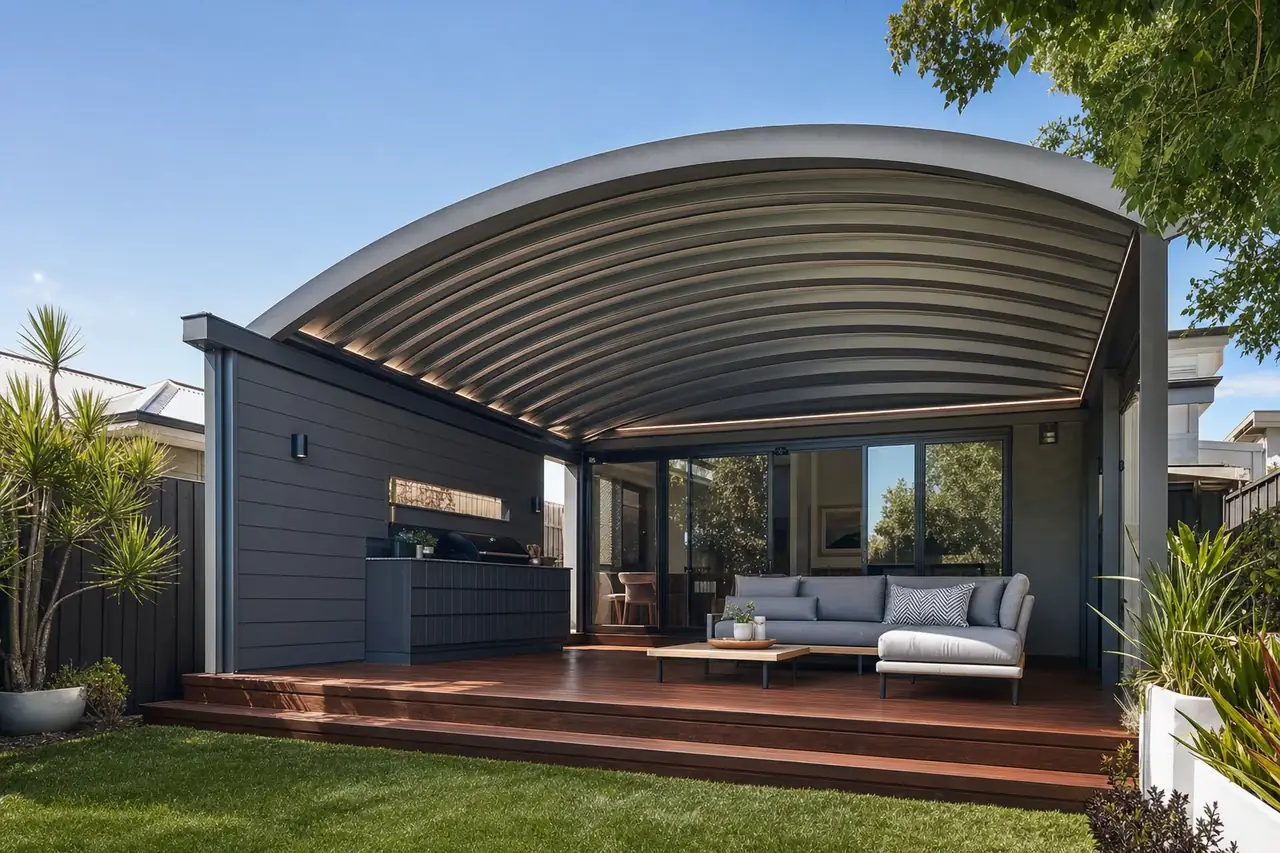
The dome roofline works in Colorbond, in polycarbonate, or in a combination of both. Which material you use changes the feel of the space more than almost any other decision in the build.
Colorbond gives you a solid overhead plane - shade, heat reflection, and a weathertight finish. Polycarbonate admits light, which means the patio feels more like an extension of the garden rather than a shaded room.
In Perth, that light also brings heat. Understanding how much of both you are getting is the starting point for this decision.
What does Colorbond actually do on a dome patio roof?
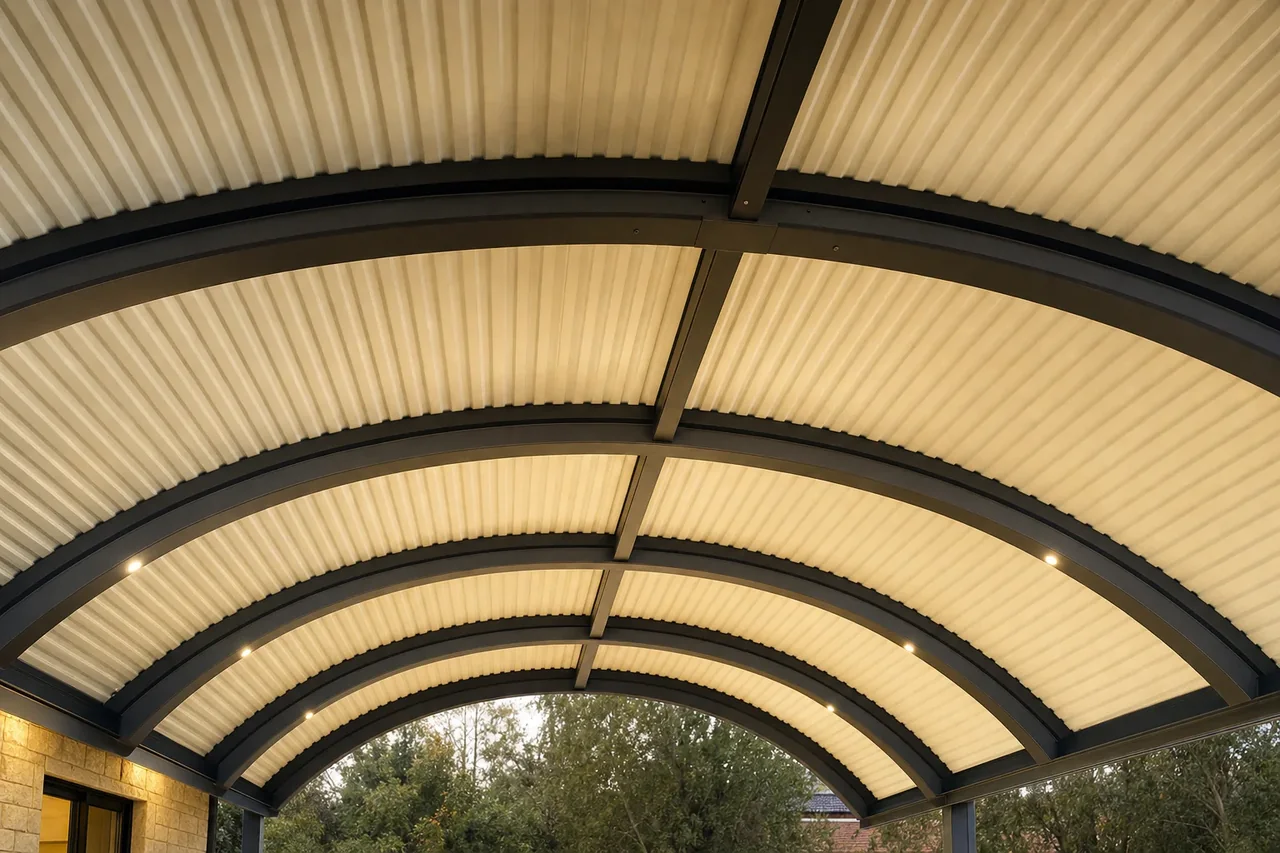
Colorbond steel panels are fully opaque. On a dome patio, they create a solid, weathertight ceiling that blocks all direct sunlight and provides maximum shade across the entertaining area below.
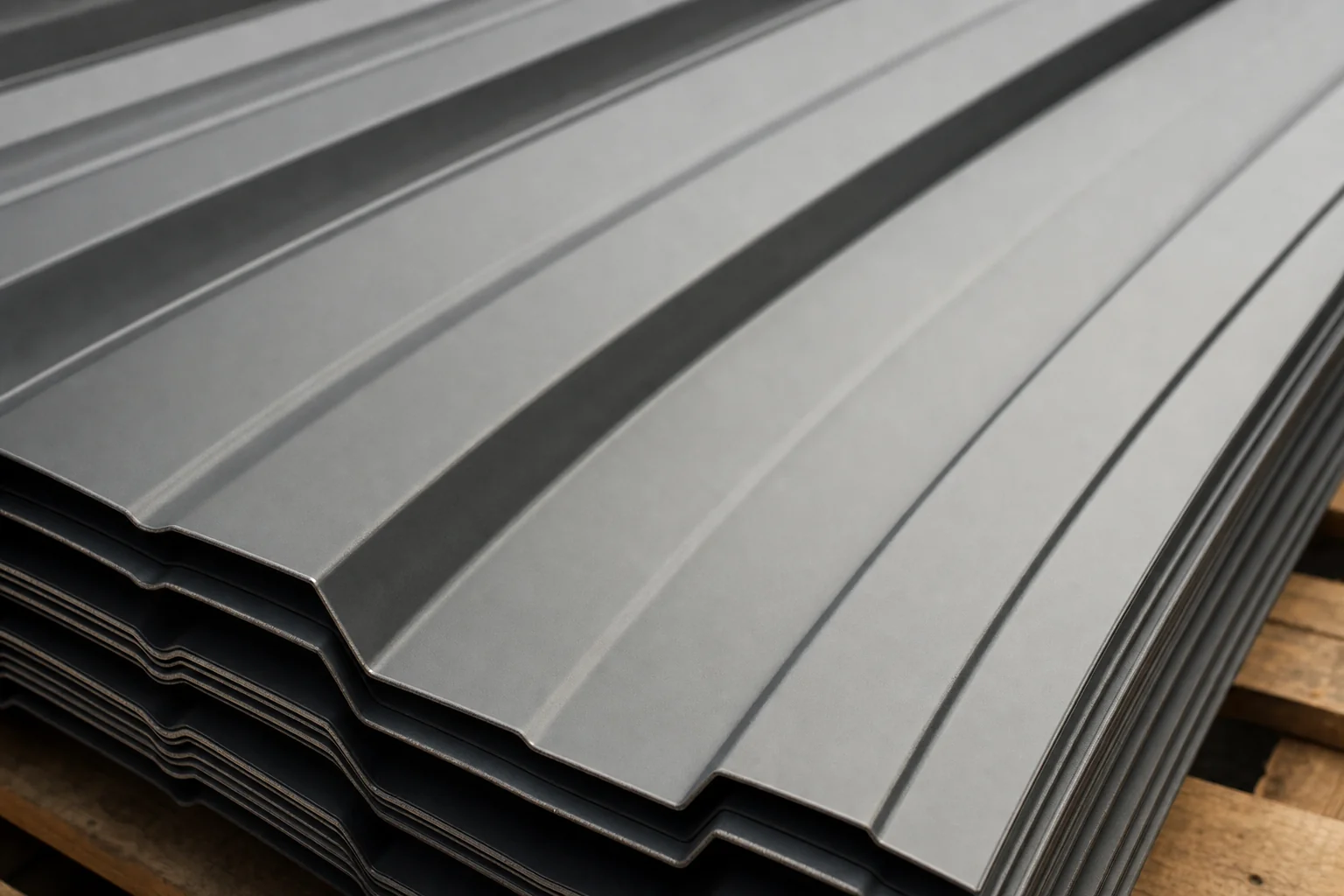
BlueScope's Thermatech coating reflects more of the solar spectrum than a standard painted finish. Lighter Colorbond colours reflect significantly more heat than darker ones, though all Thermatech colours perform better than non-Thermatech alternatives.
Colorbond colour and heat reflection in Perth
| Colorbond colour | Heat reflectivity (relative) | Best for |
|---|---|---|
| Surfmist | Highest | Maximum heat reflection, north-facing patios |
| Classic Cream | High | Warm tone, strong reflectivity |
| Shale Grey | Moderate-high | Neutral tone, good all-round performance |
| Windspray | Moderate | Popular choice, balanced performance |
| Monument | Lower | Strong visual contrast but absorbs more heat |
| Ironstone | Lower | Dark industrial look, not recommended for west-facing |
Matching your home's existing Colorbond
If your home has an existing Colorbond roof, matching the patio material to the same colour reads as intentional and integrated. Dome Patios Perth can advise on current Colorbond stock and any colour discontinuations.
What does polycarbonate do that Colorbond cannot?
Polycarbonate panels transmit natural light. A patio with a polycarbonate dome roof feels bright and open, not shaded. For north-facing alfresco areas that want to capture morning light without full sun exposure, polycarbonate can work well in the cooler months.
Single-skin vs twin-wall polycarbonate
Single-skin polycarbonate is thinner, more affordable and transmits the highest proportion of light, but it also allows the most heat transfer. Twin-wall (multiwall) polycarbonate has a fluted internal air gap that acts as a modest insulating layer, reducing heat transmission by a meaningful margin.
For Perth conditions, twin-wall polycarbonate is the more practical choice in an enclosed or semi-enclosed patio. Single-skin suits applications like a garden pergola where the space is open and natural ventilation is unlimited.
UV blocking and light transmission
UV-stable polycarbonate grades block ultraviolet radiation while still transmitting visible light. This matters for furniture, flooring and the comfort of people in the space. Most reputable polycarbonate panels sold for building use in Australia have UV coatings on at least the upper face.
Polycarbonate lets in the garden. Colorbond keeps out the heat. Most Perth homeowners want a bit of both.
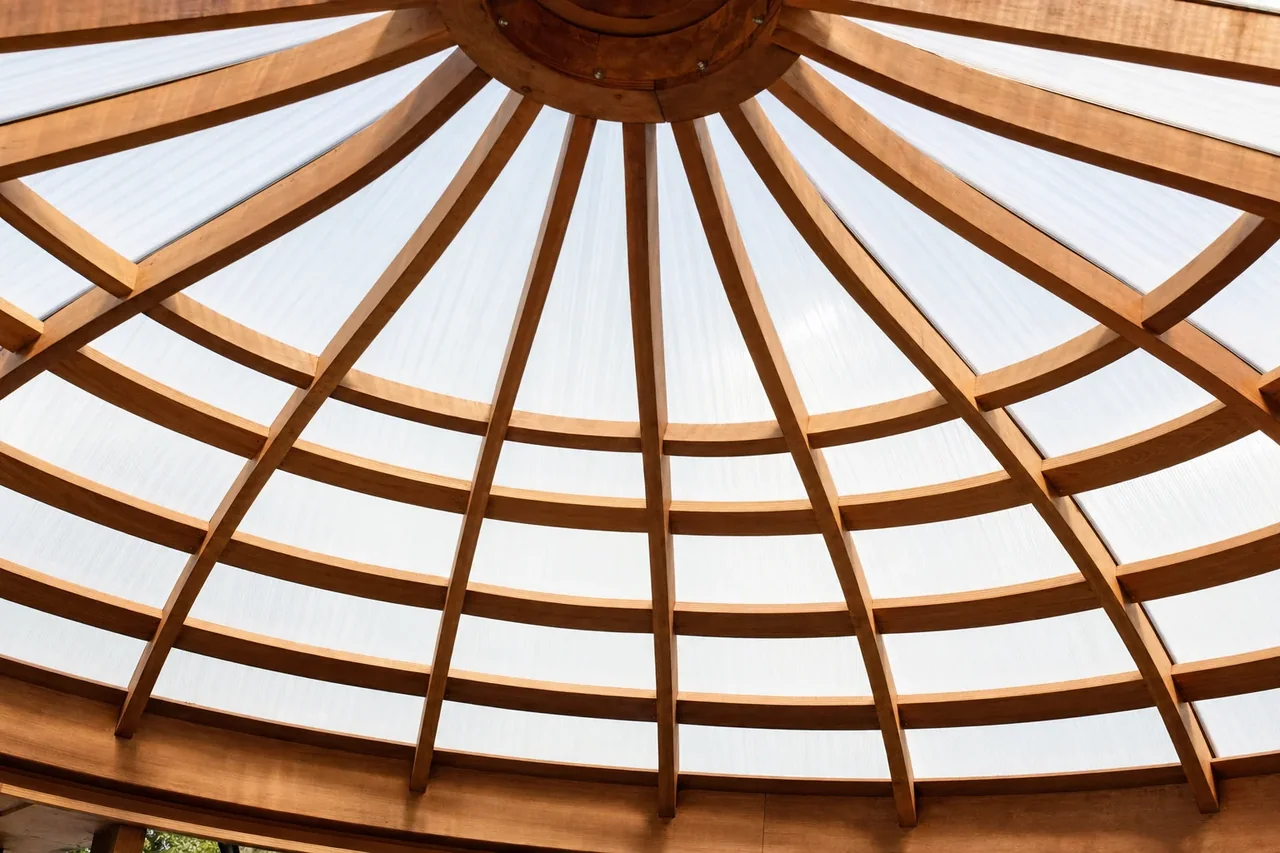
Can you combine Colorbond and polycarbonate on a dome roof?
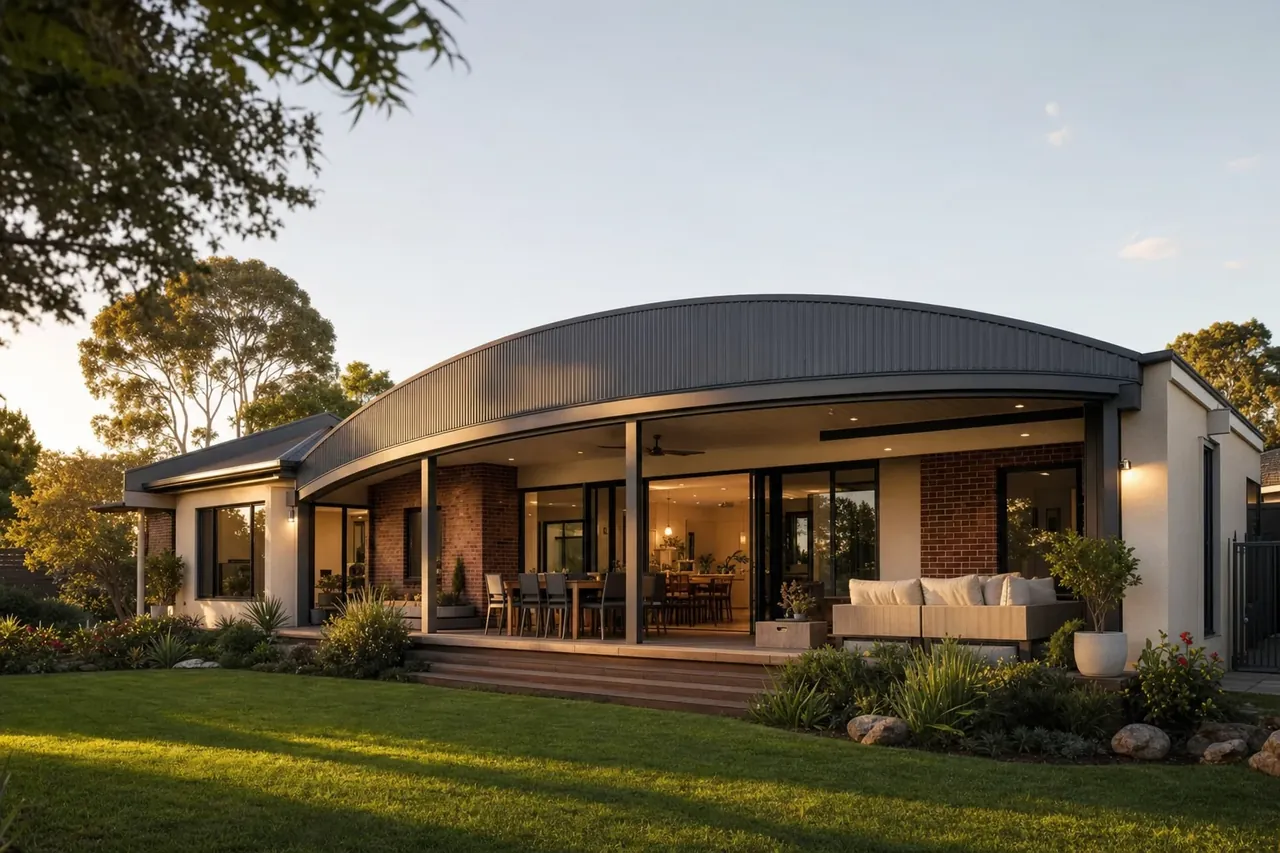
Yes, and it is the most common approach we build. A typical combination dome patio has Colorbond over the main entertaining zone - the area where people sit and eat - and polycarbonate sections toward the outer edges or garden side. This gives you shade where you need it and natural light toward the perimeter.

Full Colorbond
Maximum shade and heat reflection
Combination
Most popular - shade plus natural light
Full polycarbonate
Maximum light, higher heat transmission
Twin-wall poly
Better heat performance than single-skin
The structural design of a dome roof accommodates both materials in the same curved plane. The purlins and capping sections that form the dome structure accept either panel type without a separate sub-frame.
Placement matters more than ratio
Where you position the polycarbonate sections matters more than how much of the roof they cover. Sections on the north edge bring in morning light. Sections directly overhead in a west-facing patio bring in afternoon heat. Talk through your site orientation with us at the quoting stage.
Which material requires less maintenance?
Colorbond maintenance
Colorbond steel requires minimal maintenance. An annual wash down with a low-pressure hose removes salt deposits and dust, which is particularly relevant for Perth homes in coastal suburbs. Colorbond does not need painting over its lifetime in normal conditions.
Polycarbonate maintenance
Polycarbonate needs more attention than steel over its lifetime. The material can yellow with age on older panels and the UV coating degrades over years of Perth sun exposure. Quality panels from reputable suppliers have significantly longer UV stable lifespans than entry-level options.
Gutters and flashings at the junction between Colorbond and polycarbonate sections need occasional checking to ensure the seal is intact. Perth's winter rain events can expose any gaps in the flashing detail.