AI overview
A Colorbond patio roof blocks all direct solar radiation from passing through the roof plane. The amount of heat that accumulates in the space below is primarily determined by Colorbond colour (lighter colours reflect more solar energy), roof profile (dome lifts warm air upward, flat traps it), and side enclosure (open sides allow cross-ventilation, enclosed sides trap heat). Perth's extreme summer UV and direct solar intensity make these decisions more consequential than they are in cooler climates.
Key takeaways
- Colorbond blocks 100% of direct sunlight - no light penetrates the roof panel
- Lighter Colorbond colours reflect more heat than darker ones due to Thermatech coating
- A dome profile improves airflow and heat dissipation compared to a flat roof
- Open patio sides with cross-ventilation significantly reduce heat build-up
- Orientation matters: west-facing patios absorb more afternoon heat in Perth
- Roof panel temperature can exceed air temperature by 20-30 degrees in direct sun
Colorbond steel is opaque. It blocks all direct sunlight passing through the roof plane. That is not in question. The more useful question is how much heat builds up in the space below the roof, and what the factors are that control that.
Perth's summer is demanding. Afternoon air temperatures regularly sit above 35 degrees, and direct solar radiation adds to the radiant heat load felt by anyone in the space.
This article covers what Colorbond actually does to heat, how colour affects performance, and how the dome profile changes the thermal behaviour compared to flat and gable alternatives.
Does Colorbond block heat, not just light?
Colorbond blocks direct sunlight completely. Any heat that reaches the space below comes from radiated heat emitted by the steel panel itself after it absorbs solar energy. This is the distinction between blocking light and blocking heat.
When direct sunlight hits a Colorbond panel, the panel absorbs some solar energy and reflects the rest. The absorbed energy raises the panel temperature. The hot panel then emits infrared radiation downward into the space below.
Panel temperature in Perth conditions
In direct Perth summer sun, the surface temperature of a Colorbond steel panel can be significantly higher than the ambient air temperature. A darker colour in direct afternoon sun can reach surface temperatures that are 20-30 degrees above ambient air. This is why colour choice directly affects the comfort of the space below.
100%
Direct sunlight blocked by any Colorbond roof
20-30°C
Typical panel temperature above ambient in direct sun
Thermatech
BlueScope coating that reduces heat absorption
Lighter = better
Surfmist and Classic Cream reflect most heat
How much does Colorbond colour affect heat performance?
BlueScope's Thermatech technology is applied across the full Colorbond colour range. It improves heat reflection compared to a standard paint system, but the underlying colour still significantly affects performance. Light colours with high solar reflectance keep panel temperatures lower.
| Colour group | Solar reflectance (approx) | Practical effect in Perth |
|---|---|---|
| Surfmist, Classic Cream | High (>45%) | Cooler panel, less radiated heat below |
| Shale Grey, Windspray, Paperbark | Moderate (25-40%) | Good balance - popular for neutral aesthetics |
| Dune, Ironstone | Moderate-low (15-25%) | More heat radiated - avoid west-facing without ventilation |
| Monument, Night Sky | Low (<15%) | Highest panel temperatures - not recommended for Perth entertaining areas |
Orientation changes the impact
A darker colour on a south-facing patio is much more forgiving than the same colour on a west-facing patio. West-facing receives the most intense afternoon sun in Perth. If your entertaining area faces west, a lighter colour will make a noticeable difference to summer comfort.
How does a dome roof improve heat performance?
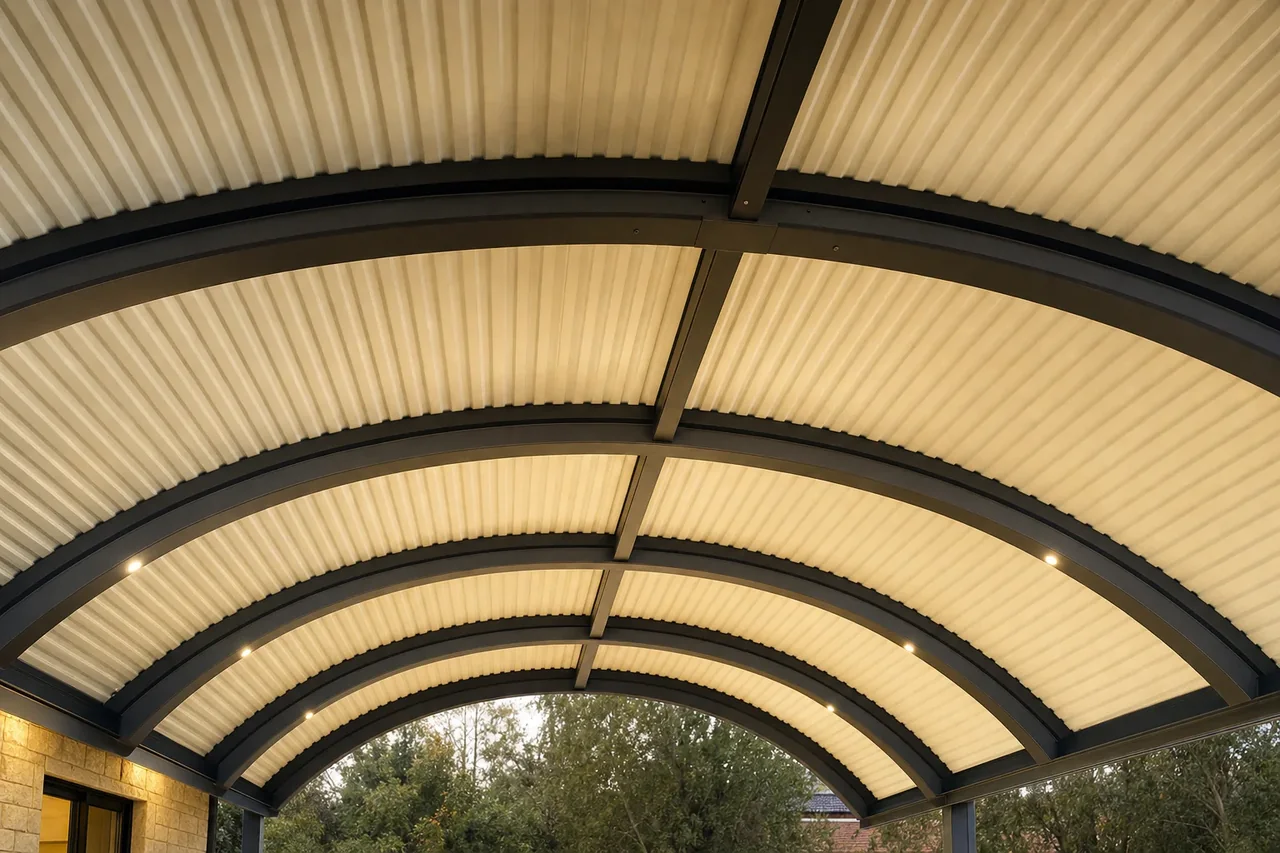
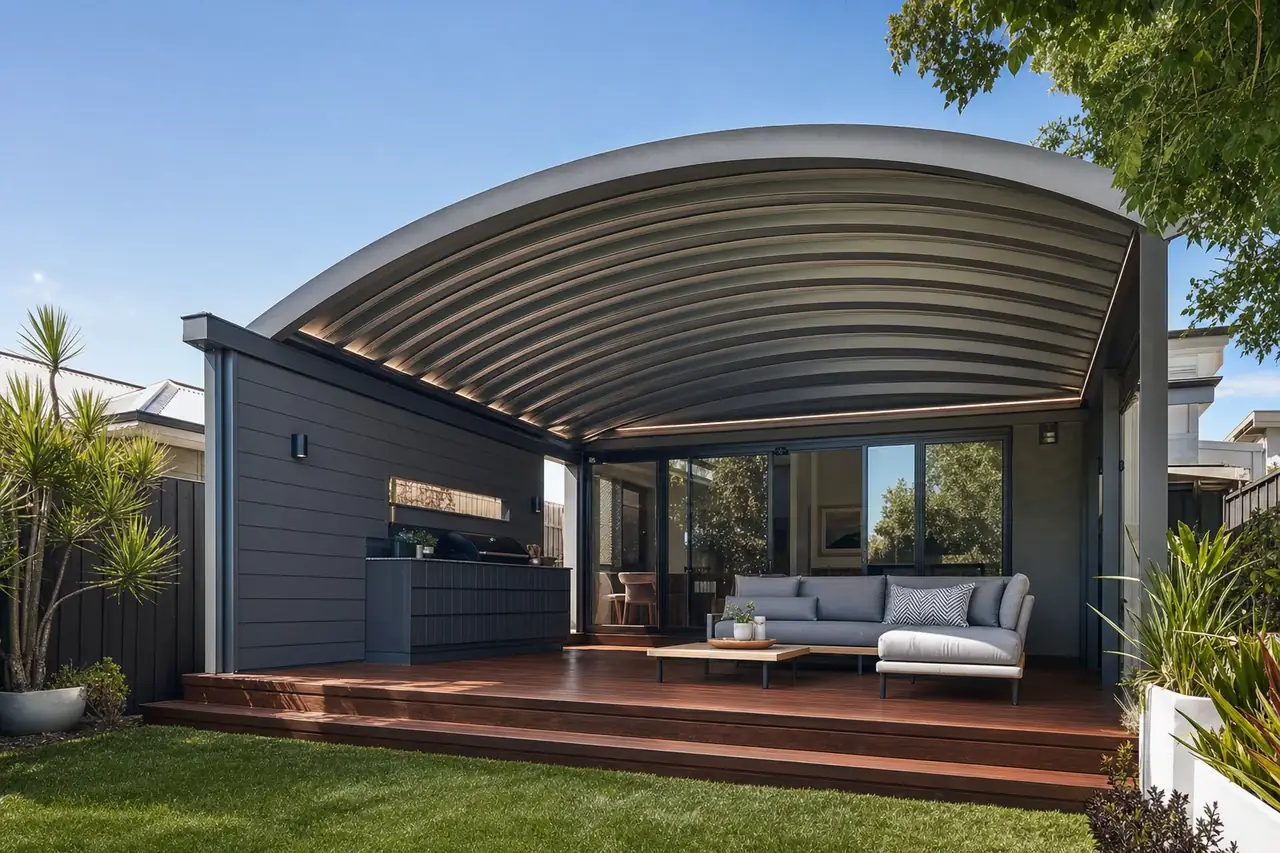
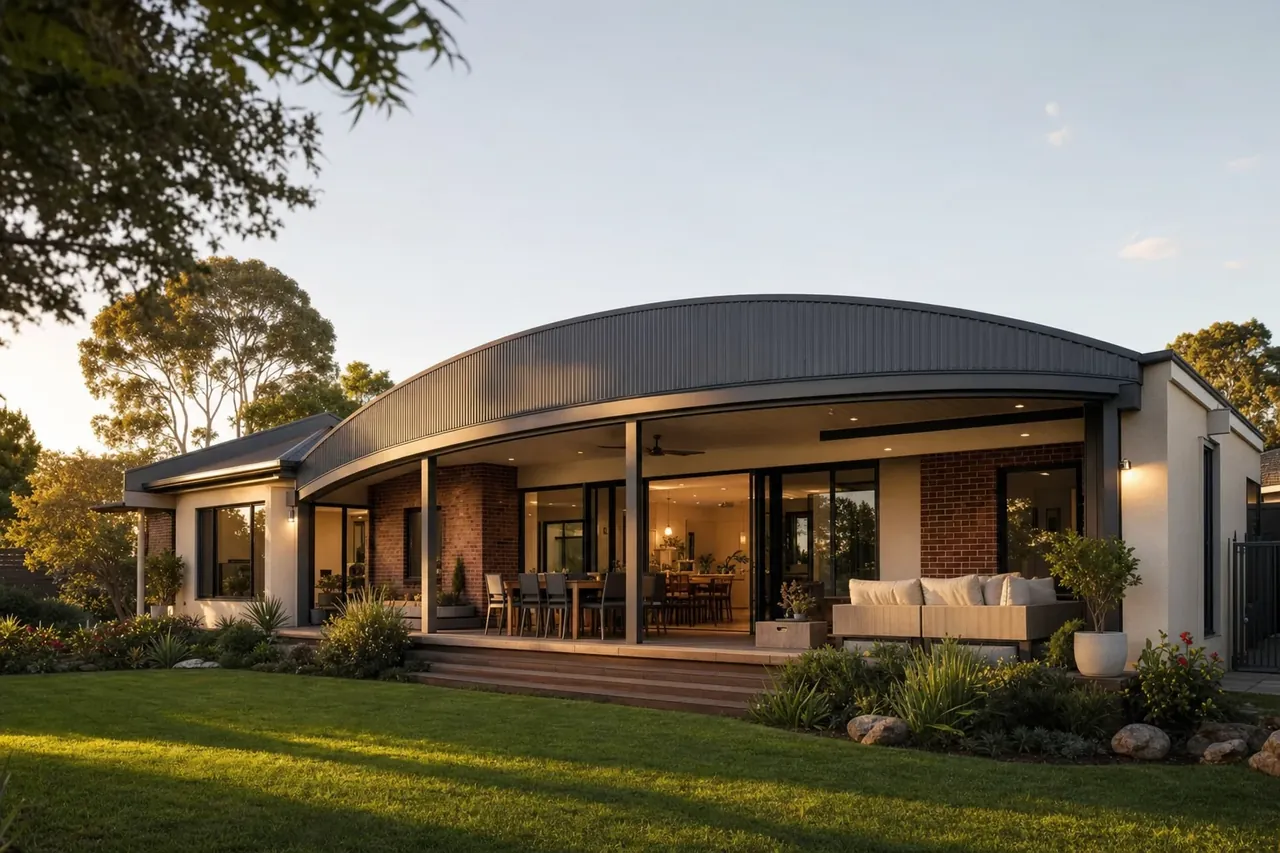
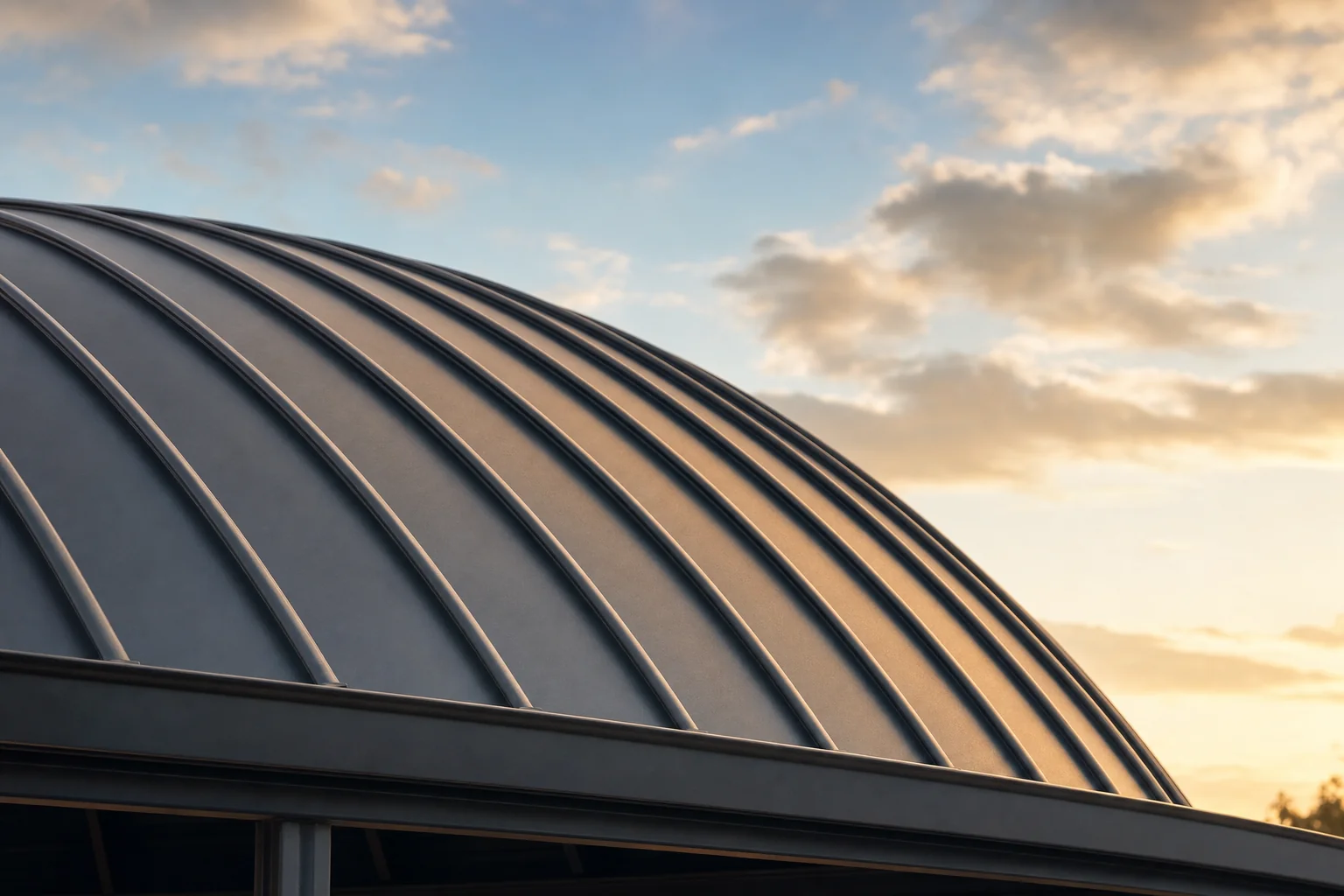
The dome profile creates a naturally curved ceiling that peaks in the centre. This shape encourages warm air to rise toward the peak and move outward toward the open edges of the patio. The effect is a passive convective movement that continuously cycles air through the space.
A flat roof prevents this upward movement. Warm air sits directly below the hot panel and accumulates at head height. In a Perth summer, the difference in perceived comfort between a dome and flat roof of the same dimensions and colour can be significant.
A curved roofline does something a flat one never will. The geometry itself drives airflow. That is not marketing - it is physics.
Open sides vs enclosed sides
A patio with fully open sides benefits from cross-ventilation. Wind moving across the site replaces the air in the space, carrying warm air away continuously. Enclosing a patio with glass, screens or walls reduces this ventilation and can make a well-designed dome roof perform more like a flat one in terms of heat accumulation.
Partial enclosure
Louvred screens or adjustable blinds give you the option to enclose the patio for privacy or weather without permanently sealing the ventilation. This is a more flexible approach than fixed glass panels if Perth summer heat is a concern.
Is insulated Colorbond an option for patios?
Insulated roof panels consist of two steel skins with a foam or mineral wool core. They provide a meaningful reduction in radiated heat reaching the space below because the insulating layer interrupts the heat transfer from the hot upper panel to the cooler lower face.
Insulated panels are more commonly used in enclosed or semi-enclosed patio rooms, home extensions and carports than in open dome patios. The additional cost and weight make them less common for straightforward open patios, where good colour selection and the dome profile achieve a comfortable result without the complexity.
- Standard Colorbond on a dome profile: most popular open patio solution
- Insulated panel system: better thermal control for enclosed patio rooms
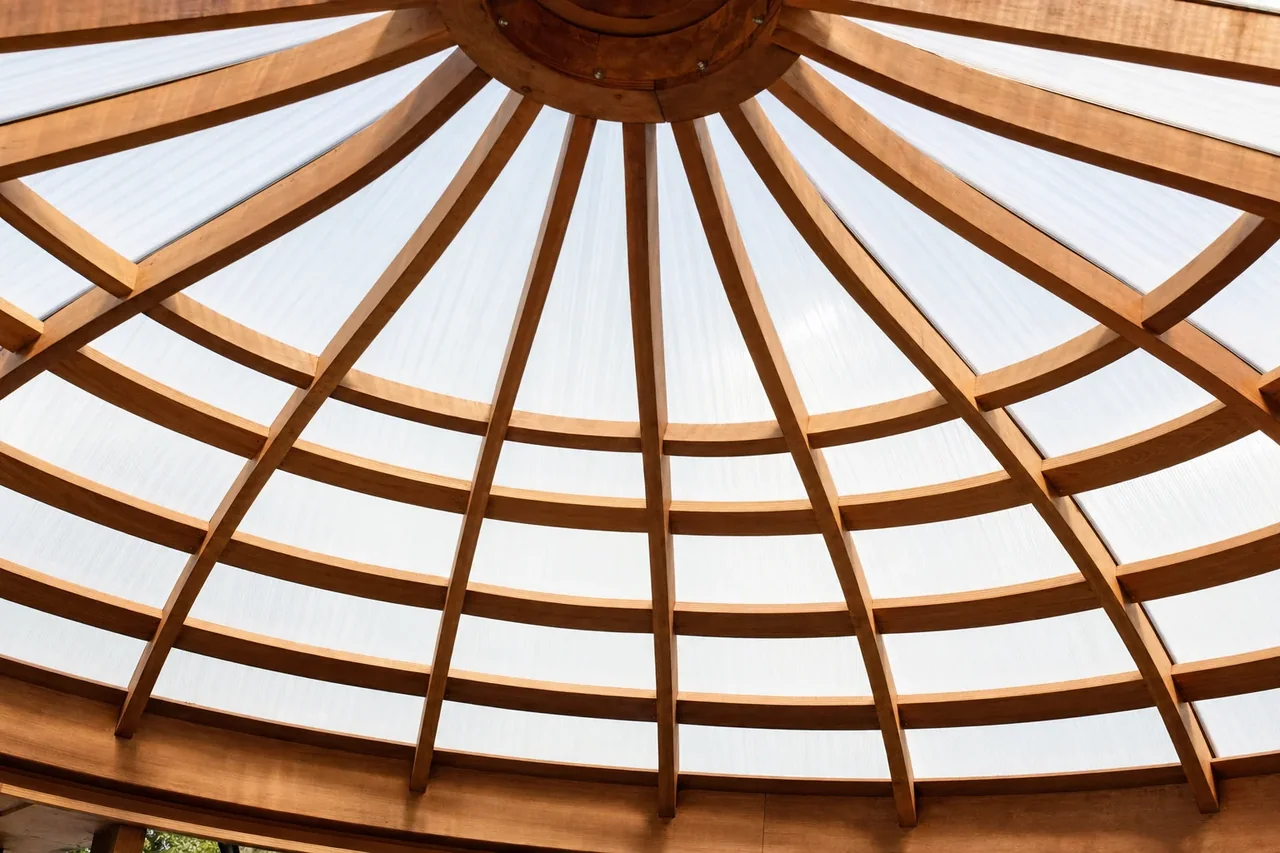
- Polycarbonate sections: light but higher heat transmission - position carefully
- Combination roof: Colorbond main field with polycarbonate at garden edge