AI overview
Designing a patio for Perth's climate requires balancing opposite seasonal demands: extreme summer heat requiring shade, airflow and heat-reflective materials, and mild but wet winters requiring enclosed options, drainage management and shelter from south-westerly winds. The most successful Perth patio designs use a dome or gable roof for summer airflow, position the open sides away from winter south-westerlies, and incorporate adjustable elements like louvred screens or track-and-blind systems to shift between open summer and enclosed winter configurations. A single-purpose summer patio used for only three to four months is a missed opportunity in Perth's mild winters.
Key takeaways
- Perth summer demands shade, heat-reflective roofing and upward-moving airflow
- Perth winter is mild but wet - a good patio design works in July as well as January
- South-westerly winds drive most of Perth's winter rain - position enclosure accordingly
- Adjustable louvres or blinds allow the same patio to suit both seasons
- Orientation to north or east captures morning light while avoiding afternoon west sun
- Dome profiles suit Perth's outdoor living culture - they feel expansive, not enclosed
Perth's climate is genuinely unusual among Australian cities. The summers are long, intensely hot and very dry. The winters are mild, green and wet. A patio that is only designed for one of these seasons misses the other six months of use.
The design decisions that make a Perth patio work year-round are not complicated, but they are specific. Orientation, roof profile, side treatment and material choices all interact with the climate in predictable ways.
This article covers the design approaches that come from building patios in Perth specifically, not just following general principles.
What makes Perth's climate different for patio design?
Perth sits in a Mediterranean climate zone with hot, dry summers and mild, wet winters. Average summer temperatures in the high 30s are common, with UV index regularly reaching 11 (extreme) from October through March. Winter temperatures are mild by Australian standards, typically 8-18 degrees, but rainfall is concentrated between May and September.
| Season | Typical conditions | Patio design response |
|---|---|---|
| Summer (Dec-Mar) | 35-42°C days, UV extreme, dry easterly mornings, hot sea breezes | Maximum shade, heat-reflective roofing, upward airflow from dome profile |
| Autumn (Apr-May) | Cooling to 25-30°C, early rain events | Retain open airflow, drainage ready for first rains |
| Winter (Jun-Aug) | 8-18°C, south-westerly wind-driven rain | Enclosed south and west sides for shelter, maintain north aspect |
| Spring (Sep-Nov) | Warming quickly, increasing UV, variable wind | Open up for spring breezes, transition from enclosed to open |
Perth outdoor season is 8-9 months
Unlike most Australian cities, Perth has a genuinely long outdoor season. A patio that works from September through May - not just January - gets used far more. Designing for winter too is one of the most practical decisions a Perth homeowner can make.
Which roof profile works best in Perth's climate?
Dome: summer airflow and expansive feel
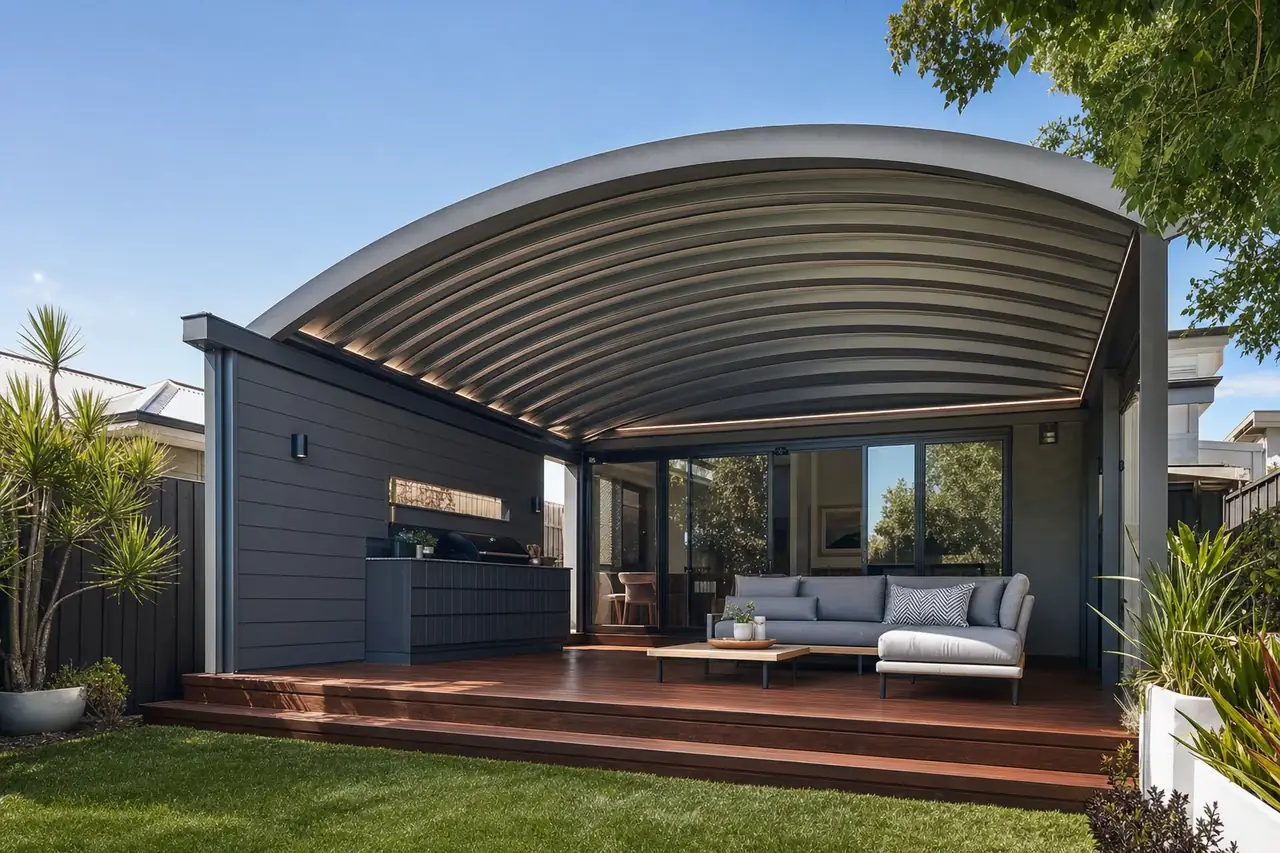
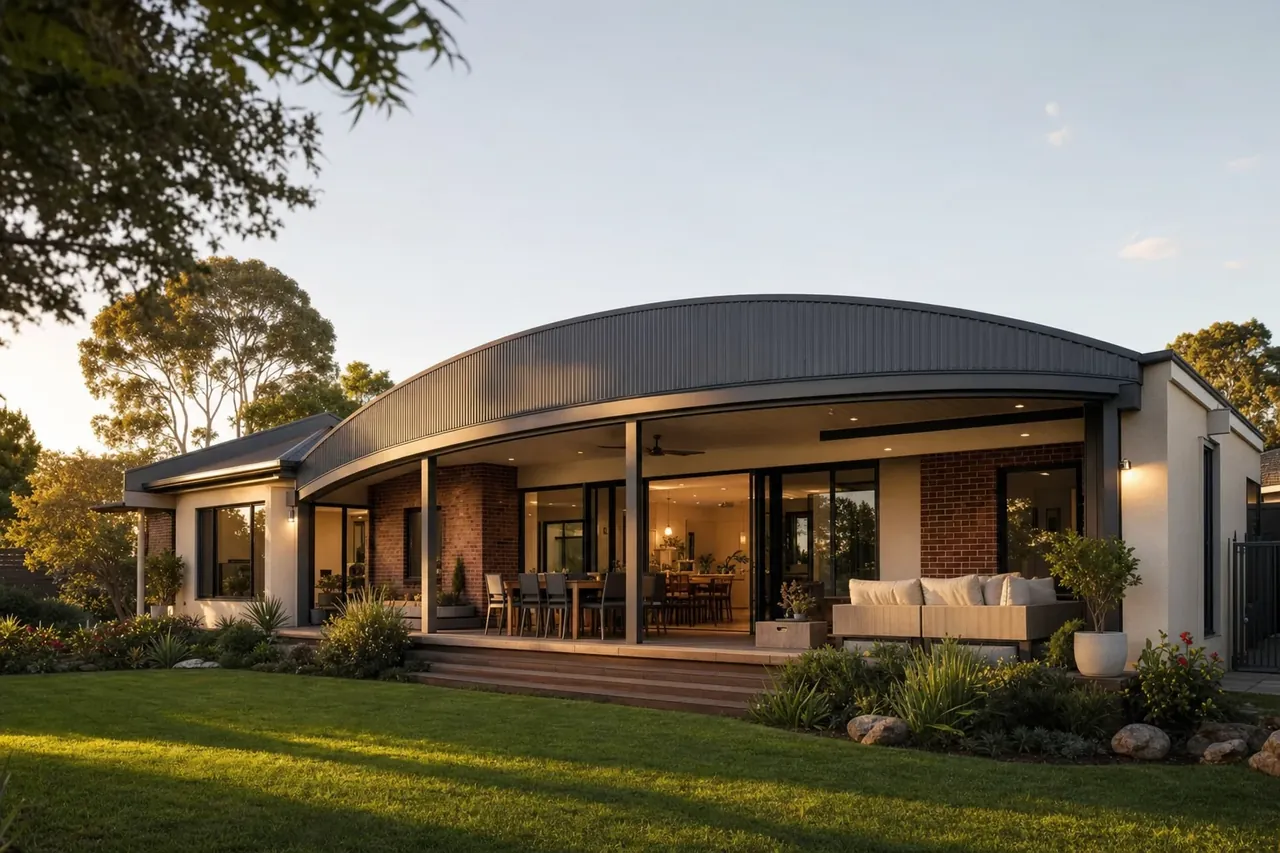
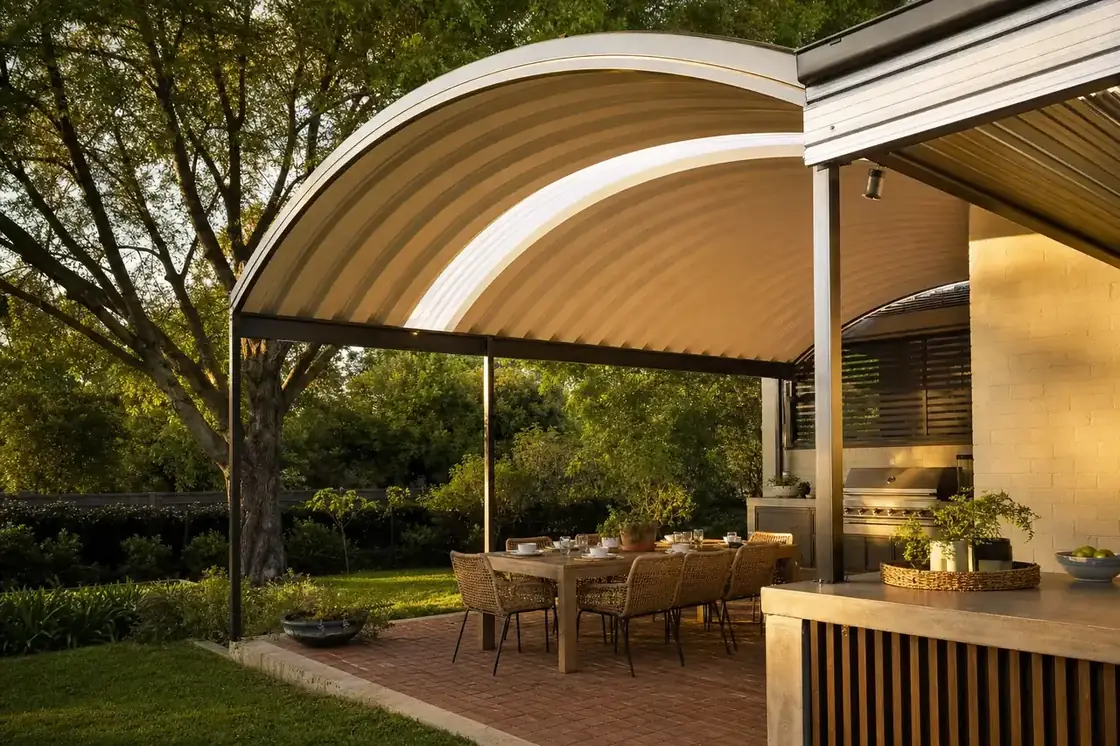
The dome profile suits Perth's outdoor living culture well. The curved roofline creates an expansive feeling overhead, warm air rises naturally toward the peak, and the symmetrical profile means the patio does not feel like a cave in any direction.
In a Perth summer, that upward airflow through the dome apex is meaningful. Hot air rises and exits at the edges rather than pooling at head height the way it does under a flat roof.
Gable: headroom for larger spans
A gable roof's peaked ridge creates strong headroom in the centre, which suits large entertaining areas where table height clearance is needed across a wide span. The pitched geometry also sheds winter rain efficiently in both directions from the ridge.
Flat: minimalist but demanding of site conditions
A flat patio roof can read beautifully on a contemporary Perth home, but it requires precise fall engineering to handle Perth's winter rain events without ponding. In summer, the lack of upward airflow makes heat management more dependent on colour selection and side ventilation.
Built for the way we live. A dome patio in Perth is not just an aesthetic decision - it is a climate one.
How should a Perth patio handle winter rain?
Perth's winter rain arrives predominantly from the south-west. When designing a patio that will be used in winter, positioning any permanent or adjustable enclosure on the south and west sides shields the living space from wind-driven rain without blocking the warmer north aspect.

Design for south-west exposure
The south and west sides of the patio take the most winter weather. Fixed screens, glass panels or adjustable blinds on these sides provide shelter without permanently enclosing the patio.

Keep the north aspect open or adjustable
Perth's winter sun comes from the north. Retaining access to north-facing sun - even in mid-winter - makes the patio usable and pleasant on clear winter days.
Size gutters for winter rain events
Perth's winter rain can come in heavy bursts. Gutters and downpipes should be sized for the roof area they serve, particularly on the west side which takes the highest rainfall intensity.
Consider adjustable louvres
A louvred roof or adjustable screen system can be fully opened in summer for airflow and partially or fully closed in winter for shelter. This is the most flexible approach for Perth's seasonal variation.
What materials suit Perth conditions year-round?
Colorbond steel is the primary structural and roofing material for Perth patios for straightforward reasons. It is engineered for Australian conditions, handles the combination of high UV, summer heat and salt coastal air better than most alternatives, and BlueScope backs it with product warranties.
Concrete footings in Perth's sandy soils
Perth soils are predominantly sandy, which affects footing design. Sand provides less lateral resistance than clay, so patio footings in Perth are typically deeper and wider than equivalent footings in eastern states. A qualified structural engineer's design accounts for this.
Coastal considerations
Coastal Perth suburbs within approximately one kilometre of the ocean sit in higher corrosivity zones (C4 under AS 4312). This affects the specification of structural steel coatings and fixings. Hot-dip galvanised or stainless fixings are standard in these zones.
Maintenance is simple in Perth's dry summers
Unlike humid eastern states where summer humidity encourages mildew on outdoor surfaces, Perth's dry summer means Colorbond patios require minimal maintenance outside of an annual wash-down to remove salt and dust build-up, particularly in coastal suburbs.
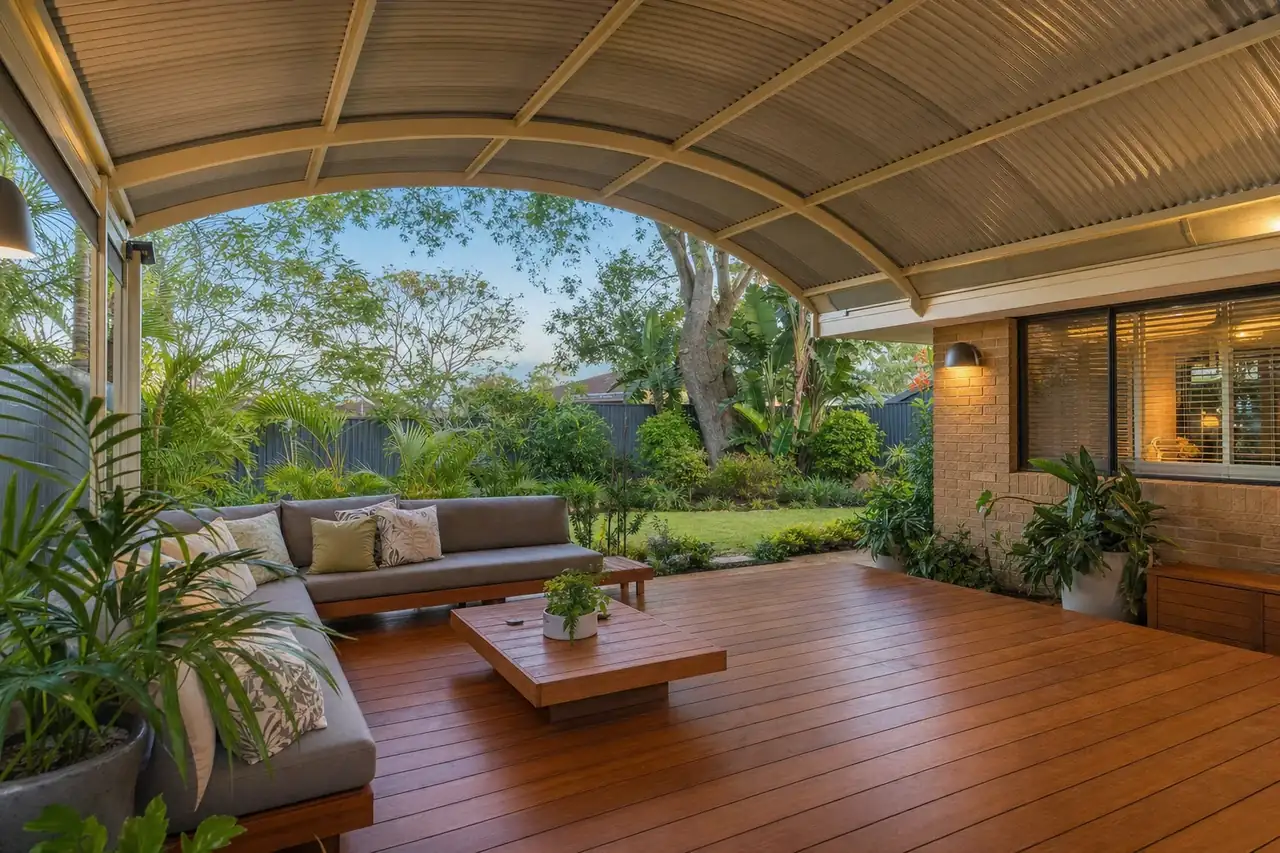
Patio design ideas that work for Perth homes
- Dome patio over north-facing alfresco: maximises winter sun access, summer airflow through the apex
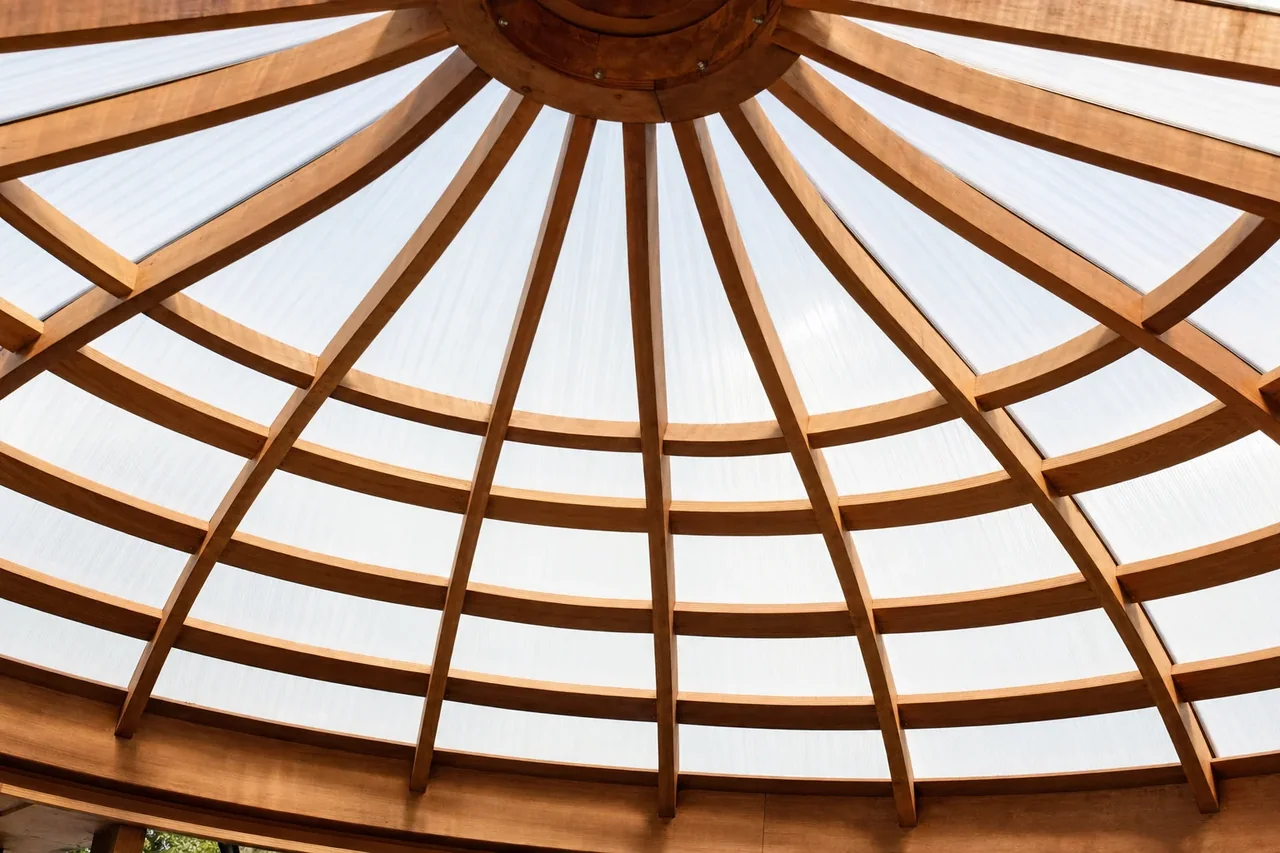
- Combination Colorbond and polycarbonate dome: Colorbond main field, polycarbonate sections on the garden side for brightness
- Wide-span gable over a large outdoor dining area: headroom at the ridge, sheds winter rain efficiently
- Dome patio over pool surround: curved profile provides coverage without feeling heavy over the water
- Skillion flat roof on a contemporary narrow site: tight clearance, clean lines, requires precise fall engineering
- Dome with louvred screens on west side: sun and rain shelter in one adjustable system
8-9 months
Perth's usable outdoor season with the right design
North
Best orientation for year-round sun access
South-west
Side most needing shelter from winter rain

Dome
Best profile for Perth's airflow needs